
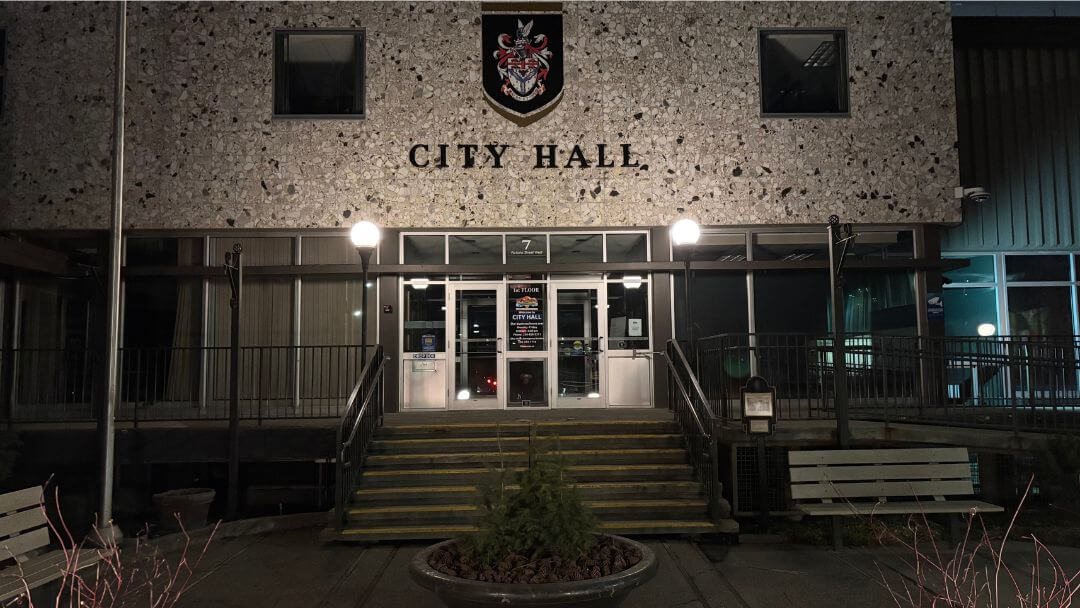
The City of Kamloops has now formally confirmed that citizens are barred from accessing its Code of Conduct complaint process, eliminating any public pathway into Council’s primary accountability mechanism.
In a written response this week, Corporate Officer Maria Mazzotta stated that under the City’s current interpretation of its Code of Conduct Bylaw, members of the public cannot submit complaints themselves, cannot submit complaints through staff, and cannot submit complaints through a member of Council.
The result is clear: Kamloops’ Code of Conduct complaint process is now closed to the public.
Kamloops Code of Conduct Complaint Process Now Closed to the Public
According to Mazzotta’s written response:
- The Code of Conduct Bylaw is the authoritative document governing who may submit complaints.
- Members of the public are not permitted to submit complaints under any circumstances.
- Staff and councillors may submit complaints only concerning their own concerns.
- The City considers this framework compliant with the Freedom of Information and Protection of Privacy Act (FIPPA).
She further deferred responsibility for earlier public statements suggesting citizens could still raise concerns through councillors.
In practical terms, this means that citizens have no access to the Code of Conduct process at all.
Contradiction With Past Public Statements
This position directly contradicts earlier public assurances.
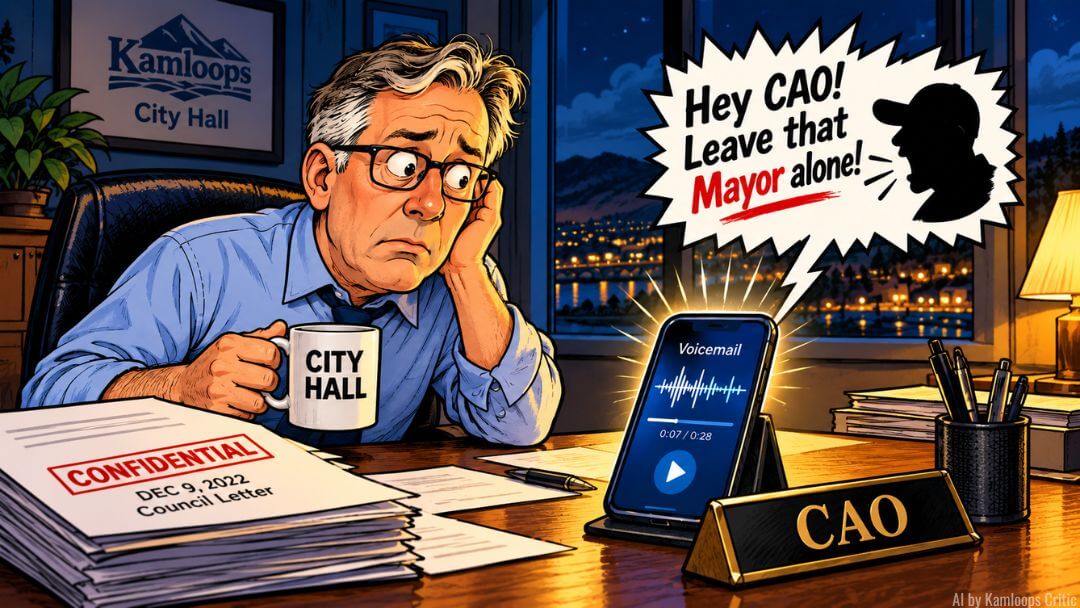
Former CAO David Trawin and Councillor Neustaeter previously stated that removing direct public submission was not intended to eliminate public access, and that concerns could still be raised through councillors.
Those statements were made publicly, documented, and relied upon by members of the public.
The City now asserts that no such pathway exists.
A Council Accountability System Without Citizens
Under the City’s interpretation:
- Citizens cannot submit complaints.
- Citizens cannot ask staff to submit complaints.
- Citizens cannot ask councillors to submit complaints.
- Citizens cannot trigger an assessment process.
- Citizens cannot compel review of documented conduct.
The Code of Conduct process now exists only for internal use by those already inside the institution.
This raises a fundamental governance question:
How can an accountability system claim legitimacy when the public is excluded from accessing it?
Conflict of Interest Concerns
The bylaw amendment removing public access was approved by councillors who were themselves the subject of active Code of Conduct complaints at the time.
Those councillors participated in discussion and voting on the amendment.
The City has never publicly addressed how that conflict of interest was mitigated.
The Ombudsperson Gap
Citizens are often redirected to the Ombudsperson’s Office.
However, the Ombudsperson has indicated reluctance to intervene in municipal governance matters and advises that investigations can take considerable time.
The Ombudsperson is not a replacement for a municipal Code of Conduct process. It is an entirely different oversight mechanism with different scope and limitations.
Cost Justifications
The City has cited investigation costs as a justification for removing public access.
However, those costs represent a fraction of the City’s overall governance budget, and transparency advocates argue that financial inconvenience is not a valid reason to remove accountability mechanisms.
(See KamloopsCritic.ca’s previous reporting on Kamloops’ Code of Conduct process for a detailed breakdown.)
Confidentiality as a Shield
The City also asserts that Code of Conduct complaints are intended to be confidential.
Yet the conduct in question occurs in public meetings, by elected officials, in view of the public record.
Excessive confidentiality in governance matters does not protect democracy — it shields institutions from scrutiny.
The Consequence
The consequence of the City’s current position is not procedural nuance.
It is structural:
Kamloops citizens are now barred from Council’s own accountability process.
If a councillor behaves improperly, the public must rely entirely on insiders to decide whether that conduct is worthy of review.
That is not accountability.
That is gatekeeping.
Why This Matters for Kamloops Council Accountability
Municipal government is the level of government closest to citizens.
When accountability mechanisms are closed to the public, trust erodes.
Not because of any single councillor — but because systems that cannot be accessed cannot be trusted.
Accountability is not measured by how well institutions protect themselves.
It is measured by how willing they are to be examined.
The Record Now Stands
The City has now confirmed, in writing, that:
- The public has no access to the Code of Conduct complaint process.
- This is the City’s final procedural interpretation.
- No indirect pathways exist.
That record belongs to the public.
Closing
Accountability systems that cannot be used by the public are not accountability systems.
They are administrative rituals.
Kamloops deserves better than that.
What Can You Do?
Email City Council
Let Council know what you think. If you're not happy with being silenced, tell them.
Email: citycouncil@kamloops.ca
Editorial disclosure: The author of this article is also the citizen who sought to submit a Code of Conduct complaint referenced above. This article relies exclusively on written correspondence, public records, and documented statements.

This should be challenged in court!, This is ridiculous! Civic officials must be held accountable if they have broken the law or done anything inappropriate! Taxpayers of the city MUST have the ability to launch complaints and inquiries as to the behaviour of ELECTED officials!
The farther I go back in records that I’ve read I realize what an inept, crooked, me me attitude.
Sure the mayor screwed up in the beginning that got sorta of straightened out! No help from any of the council, in fact did everything in their power to take away all his power .
Now you can’t even file a complaint against any of them.
I sure do hope that the voters ( the ones that actually vote) see this and realize how corrupt city council is know.
Management in city hall needs a weight loss!
Any way bye remember to vote😎